Elahe Esmaili filmed and published a documentary called A Move which highlights her experience returning to her hometown, in Iran. Inspired by the movement for women’s rights in Iran, she no longer feels comfortable wearing a hijab. Her family and friends share common values which require women to wear a hijab, and she clearly expresses that her values no longer align with theirs. Esmaili’s A Move functions as a social documentary through her ability to humanize her subjects and stay genuinely connected to them, even when their beliefs don’t align.
Esmaili includes a lot of clips within her documentary that show her conversing with family members about their perspective on her decision not to wear a hijab. The article, Social Movement Documentary Practices, written by Gino Canella, discusses the ways filmmakers use storytelling and relationships to support social movements. Canella writes, “Developing relationships built on trust requires months, if not years, of commitment…. Self-reflexivity in ethnographic research that includes participation observation and in-depth interviews is crucial for understanding how long-term, meaningful relationships with subjects are invaluable for gathering thoughtful insights and candid responses into the organizations and their campaigns”(Canella 29). Esmaili’s ability to capture her family members speaking from their point of views illustrates Canella’s point that their close bond can help gather candid responses and true perspectives of people with traditional values. Since Esmaili is both filmmaker and insider, she can document conversations that an outsider could never access.
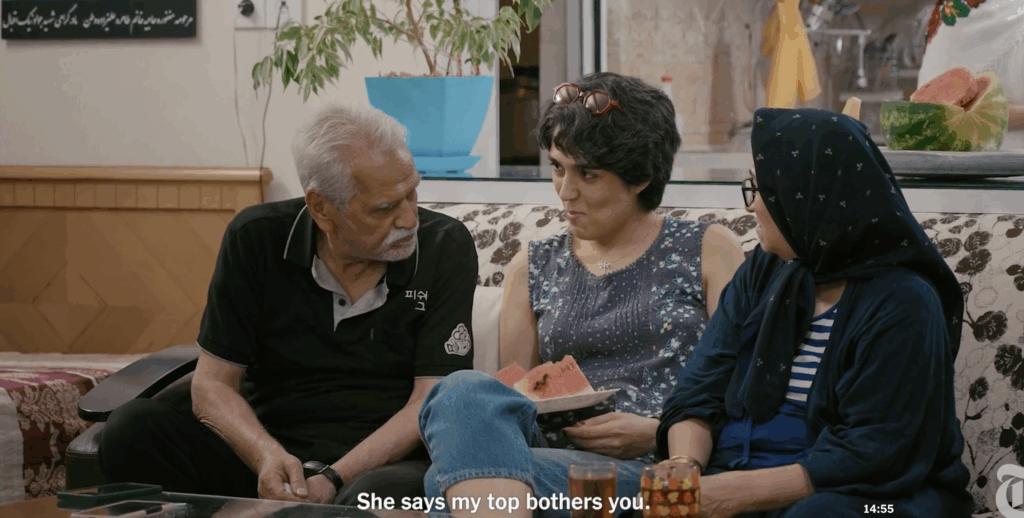
In her film, Esmaili humanizes traditional Iranians by showing her family members as real, emotionally complex people rather than just strict parents who enforce their traditional beliefs on her. She includes personal conversations where her parents share their sadness and worry about her choice not to wear the hijab and her decision to dress in the way she does. This connects to Canella’s point that documentary films can “humanize” groups who are often reduced to stereotypes (Canella 29). Esmaili uses her documentary to help viewers see her family with empathy and understand their perspectives instead of judging them.
Leave a Reply