Category: Uncategorized

  • Documentary Voice and Location in “Everything but Paid”

    “Everything but Paid” documents the experience of independent artists in a modern music industry that demands constant visibility, while offering limited support or compensation. The film follows both Gabriella Whited, a successful independent artist from Los Angeles, and myself, Sarah Lola. As an upcoming independent artist, my social location directly shaped the film’s point of view. I understand firsthand the financial stress and relentless work that come with being a small artist, and the film reflects the urgency I feel for change within the industry.

    Since this documentary is meant to speak for all the millions of independent artists around the world, it is told primarily through a conversational-style narration. I purposely located myself as a participant in the film because I knew that showing my personal experience was going to get the message across far more effectively than if I were to simply observe other subjects.This insider perspective allowed me to portray the experience with authenticity, showing not only what independent artists do, but how it feels to do it. My social location as an independent artist who is early on in their career, barely making any money, yet having a strong passion shapes this voice. My perspective is not neutral, and I want the viewers to feel that. It was important to me that I narrated the film as if I was talking to a friend about my experiences. Mine and Gabriella’s intention when we recorded clips of us speaking was to educate and inform people about our experiences as artists, while maintaining a casual tone.

    The story is mainly told through interviews, where Gabriella and I speak on behalf of other artists. I include close up shots of my music spaces and equipment, behind-the-scenes clips of a photoshoot, as well as older performance clips. I enjoyed using the “Ken Burns” effect when editing the still images, to add some movement. I used a close up photo of piano keys which showed a pattern and texture, which we learned about in the lab portion of the course. After an introduction which briefly introduces the topic of discussion and the hard work independent artists must do, I intentionally include a video of 5 year old me playing the piano, to convey a sense of nostalgia and passion. I also include a close up clip of Gabriella’s first time posting a song. These clips help to prove the point that being a small artist requires years of hard work. Additionally, my intention behind this was to show on behalf of other artists, that music is a passion and the music industry wants artists to forget that. (The film is too large so here is a link to an unlisted YouTube video of the film) https://youtu.be/pb-UPUw5sN4
  • Documentary Voice and Location in “Everything but Paid”

    “Everything but Paid” documents the experience of independent artists in a modern music industry that demands constant visibility, while offering limited support or compensation. The film follows both Gabriella Whited, a successful independent artist from Los Angeles, and myself, Sarah Lola. As an upcoming independent artist, my social location directly shaped the film’s point of view. I understand firsthand the financial stress and relentless work that come with being a small artist, and the film reflects the urgency I feel for change within the industry.

    Since this documentary is meant to speak for all the millions of independent artists around the world, it is told primarily through a conversational-style narration. I purposely located myself as a participant in the film because I knew that showing my personal experience was going to get the message across far more effectively than if I were to simply observe other subjects.This insider perspective allowed me to portray the experience with authenticity, showing not only what independent artists do, but how it feels to do it. My social location as an independent artist who is early on in their career, barely making any money, yet having a strong passion shapes this voice. My perspective is not neutral, and I want the viewers to feel that. It was important to me that I narrated the film as if I was talking to a friend about my experiences. Mine and Gabriella’s intention when we recorded clips of us speaking was to educate and inform people about our experiences as artists, while maintaining a casual tone.

    The story is mainly told through interviews, where Gabriella and I speak on behalf of other artists. I include close up shots of my music spaces and equipment, behind-the-scenes clips of a photoshoot, as well as older performance clips. I enjoyed using the “Ken Burns” effect when editing the still images, to add some movement. I used a close up photo of piano keys which showed a pattern and texture, which we learned about in the lab portion of the course. After an introduction which briefly introduces the topic of discussion and the hard work independent artists must do, I intentionally include a video of 5 year old me playing the piano, to convey a sense of nostalgia and passion. I also include a close up clip of Gabriella’s first time posting a song. These clips help to prove the point that being a small artist requires years of hard work. Additionally, my intention behind this was to show on behalf of other artists, that music is a passion and the music industry wants artists to forget that.

    (It won’t allow me to embed the video here, it says that it is too large, but I have submitted it into canvas).

  • A Humanizing Lens on the Movement for Women’s Rights in Iran

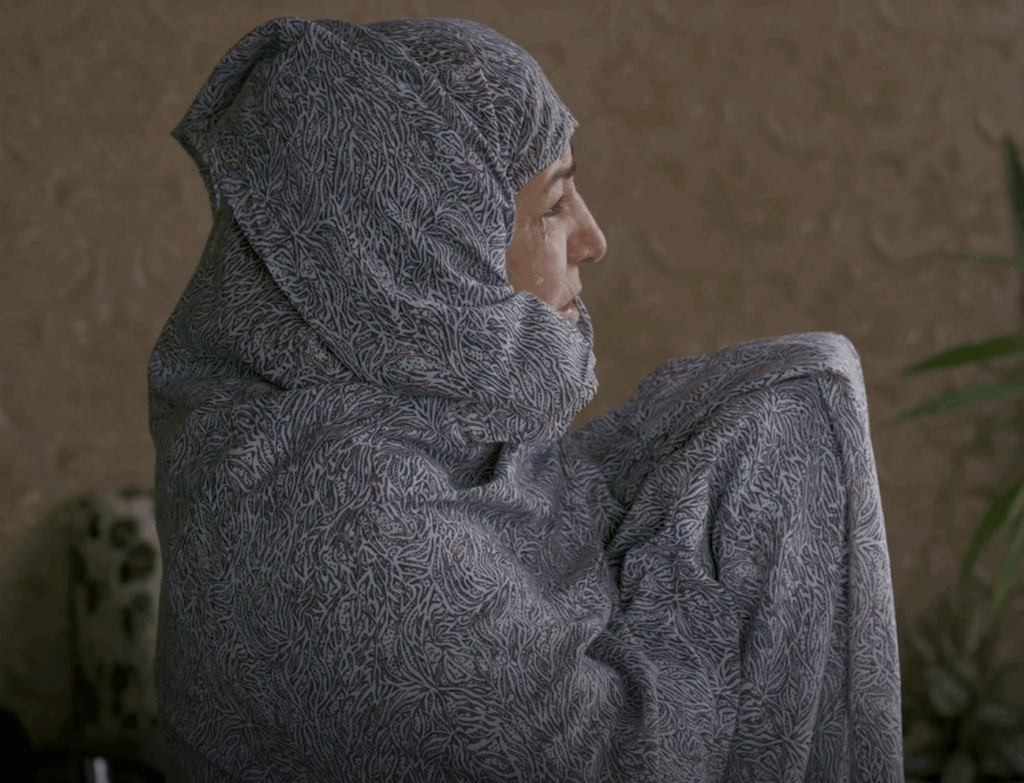
    Elahe Esmaili filmed and published a documentary called A Move which highlights her experience returning to her hometown, in Iran. Inspired by the movement for women’s rights in Iran, she no longer feels comfortable wearing a hijab. Her family and friends share common values which require women to wear a hijab, and she clearly expresses that her values no longer align with theirs. Esmaili’s A Move functions as a social documentary through her ability to humanize her subjects and stay genuinely connected to them, even when their beliefs don’t align.

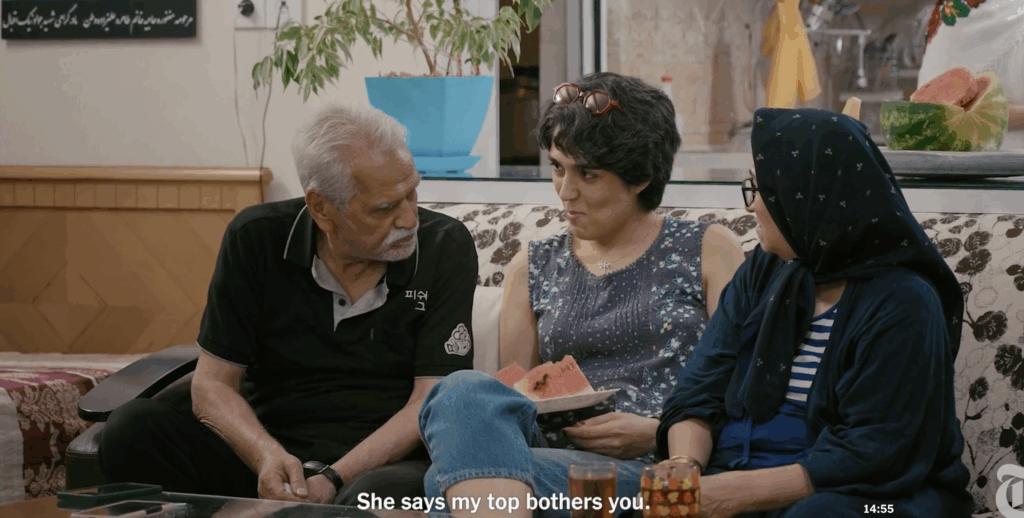
    Esmaili includes a lot of clips within her documentary that show her conversing with family members about their perspective on her decision not to wear a hijab. The article, Social Movement Documentary Practices, written by Gino Canella, discusses the ways filmmakers use storytelling and relationships to support social movements. Canella writes, “Developing relationships built on trust requires months, if not years, of commitment…. Self-reflexivity in ethnographic research that includes participation observation and in-depth interviews is crucial for understanding how long-term, meaningful relationships with subjects are invaluable for gathering thoughtful insights and candid responses into the organizations and their campaigns”(Canella 29). Esmaili’s ability to capture her family members speaking from their point of views illustrates Canella’s point that their close bond can help gather candid responses and true perspectives of people with traditional values. Since Esmaili is both filmmaker and insider, she can document conversations that an outsider could never access. 


    In her film, Esmaili humanizes traditional Iranians by showing her family members as real, emotionally complex people rather than just strict parents who enforce their traditional beliefs on her. She includes personal conversations where her parents share their sadness and worry about her choice not to wear the hijab and her decision to dress in the way she does. This connects to Canella’s point that documentary films can “humanize” groups who are often reduced to stereotypes (Canella 29). Esmaili uses her documentary to help viewers see her family with empathy and understand their perspectives instead of judging them.

  • Everything But Paid

    In my 60 second documentary, “Everything But Paid”, I documented the struggles and experiences of being a small independent music artist in today’s modern society. I mention all of the roles that every small artist must take on to compete with bigger, successful artists at the very top. The choices that informed my project came from wanting to show what it’s really like to be an independent artist in 2025. I wanted to move past the idea that success in the music industry is based on fame or money, and instead show the side most people don’t see, which is the constant work, the uncertainty, and the emotional toll that comes with trying to make it on your own.

    I aimed to document the experience of an independent artist through a participatory mode, using my narration, personal storytelling, and use of original music in the background. I chose my own song not only to highlight my work as an independent artist, but also because it is supposed to represent the feeling of longing and waiting for something — in this case, it is independent artists longing for success in music. People see viral artists and assume they have “made it”, but behind that are millions of others doing the same work, just without luck or enough exposure. That’s the part I wanted my audience to feel.

    My project reveals my location as both the storyteller and the subject. I document the experience of a small artist from someone who personally lives these struggles daily, rather than a detached outsider analyzing it. My point of view is that of an artist who loves what they do, but also sees how unfair and exhausting the system can be. By putting myself in the story, I am showing what it means to chase your passion, even without expecting or receiving the most desirable outcome. 

  • Barret’s Location in “Stranger With a Camera”

    In “Stranger With a Camera”, documentarian Elizabeth Barret locates herself as not only the filmmaker, but as a resident of the community she documents. She documents the 1967 killing of another filmmaker who came to document poverty in the area. What makes this documentary powerful is how Barret shows her own position in it. She does not document as someone who is observing a new place, rather she is someone who belongs to the community she’s filming. Her social and personal location shapes everything about the film.

    Barret’s connection to the people of Appalachia is clear from the way that she films. Including clips of everyday life, by capturing the mountain roads and family gatherings makes the story feel more familiar and real, and is what makes the story of violence and misunderstanding more impactful. As Robert Coles writes, “the issue is that of location—how a particular writer or researcher decides to commit himself or herself with respect to those others being studied, watched, heard, made the subject of a writing initiative” (Coles, Ch. 1, p. 24). Barret’s commitment to documenting this story is evident, as she loves the community, but also must represent both sides of the story she documents with respect to all subjects.

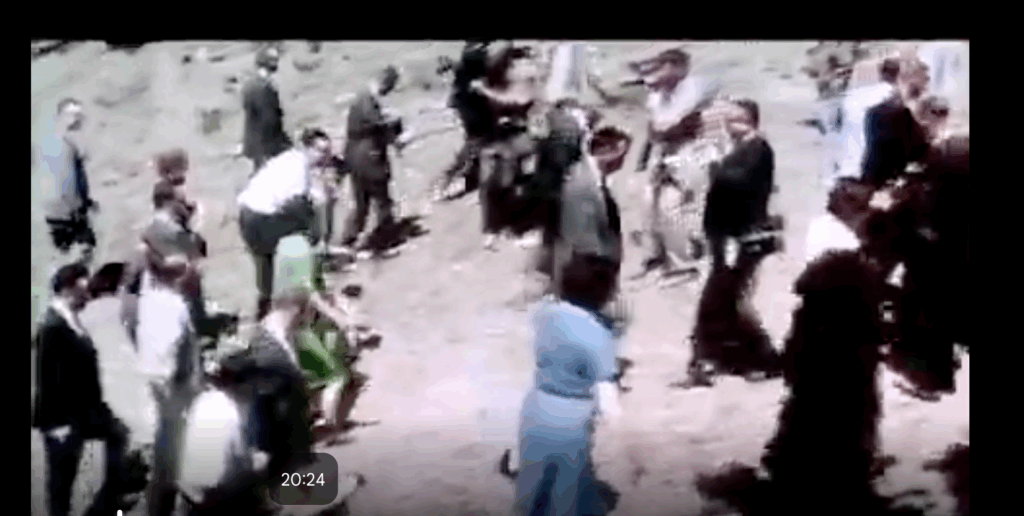
    This image, taken around 10:58 in Stranger with a Camera, shows a group of local residents walking together through their Appalachian community. It reflects Elizabeth Barret’s location as both a filmmaker and a community member. By filming familiar people in their everyday lives, she shows that she is part of this world, not an outsider observing from a distance. The shot feels natural and respectful, capturing the average daily life of people. This choice shows Barret’s closeness and understanding for the people she films and her desire to represent them with honesty and care.

    Barret also films as what Coles calls a “participant observer”, which is someone involved in the story they document. She appears in the film and speaks in a calm, reflective voice, allowing viewers to see her own doubts and responsibilities as a filmmaker. “I may well be called a ‘participant observer’ or an ‘advocate’… someone who has become ‘involved’ with those he has met,” Coles writes (p. 23). Barret exemplifies this idea perfectly, as she is both inside and outside of the story.

    Bill Nichols says that a documentary’s voice “shows how the filmmaker engages with the historical world and conveys that engagement to us.” Barret’s narration, careful editing, and honesty all reflect that engagement. Through all of Barret’s efforts, viewers feel both the love and the discomfort that come from filming a person’s own home.

  • Moral Witness in the Documentary Photography of Dorothea Lange

    Dorothea Lange believed that the purpose of photography was not only to document an event, but to capture reality and evoke emotion in viewers. Her photography often captured people in their casual state during a historical time. These photographs tend to have a lot of detail and depth, the more a viewer analyzes what they see. Her photographs display her empathy for the subjects, and she wanted viewers to feel that empathy through simply looking at a photograph. 

    Robert Coles often discusses in his book, “Doing Documentary Work” that true documentary work is not only about recording true events, but it is about ethics and understanding the subject. He discusses how Lange documents history from her point of view and explains, “where we locate ourselves with respect to our vantage point as documentarians will tell us not about what (who’m) we’ll see, but who we, the viewers, are…”(Coles 42). This demonstrates that Lange’s photos show who she is behind her camera, based off of her intentions. It also tells us that viewers understand their values and empathy through looking at work such as Lange’s photography.

    “The Unwritten Record” by Kaitlyn Crain Enriquez covers Lange’s most famous work and her experience as a photographer. Enriquez writes, “The War Relocation Authority hired Lange, and other photographers, to document Japanese neighborhoods, evacuation processing centers, and internment camp facilities”. This shows that Lange was officially hired by the government to document internment, although her photos went beyond simply documenting. Although she worked for the War Relocation Authority to document events, Lange used her camera to reveal the suffering and the loss of freedom of Japanese Americans.

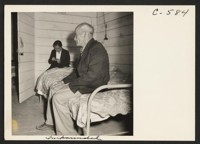
    Dorothea Lange’s photograph “Old Mr. Konda in barrack apartment, after supper” (1942) reveals her deep empathy and commitment to documenting people’s true state. In this photo, Lange captures a man sitting after dinner, with his daughter knitting behind him. Through this simple photograph, she humanizes Japanese Americans who were unjustly imprisoned, showing them as ordinary families, not enemies. The full title of the photograph notes their background as farmers, reflecting her respect to the subjects and desire to tell their full story. 

    Title: Old Mr. Konda in barrack apartment, after supper. He lives here with his two sons, his married daughter and her

  • Analysis of Coles’ and Nichols’ Approach to Documentary Work

    In Robert Coles’ “Doing Documentary Work” and Bill Nichols’ chapter, “How can we define documentary film?”, both authors refer to documentary work as a film that displays real events and real people, although they both approach this idea from different perspectives. Nichol’s emphasizes how “Documentaries tell stories about what happens in the real world” (Nichols p.7). His writing is very direct and gets straight to the point of common aspects of documentary work. He stresses the idea that documentary work is to portray exactly what the fact of the event or story was. Coles focuses immensely on how the documentarian’s values, location, and emotions ultimately shape the result of a documentary. Coles clearly aims to get across to readers that documentaries are always a mix of truth and personal perspective which is influenced by a persons location and environment. He writes,“They also move from the third-person voice to that of the first person—a shift that tells a lot about their connection to the people being described, and about their intentions as writers” (Coles 42). This emphasizes his point that the location of the documentarian will shift the story of the film. By understanding the intention of the documentarian, we as the viewers can better understand the story as a whole, because the message becomes much clearer when we understand why they chose to share what they did.

    While they have different perspectives on documentary work, they also share a common view that documentaries are never neutral, and will always be shaped by the perspective of the documentarian. Nichol’s points out the importance of the use of modes and models, editing techniques, chronology of scenes, etc (Nichols 195). He mentions how beneficial it can be to take notes on these types of things in order to better understand the work in terms of how it was made, why it was made, and what the intention was behind it.

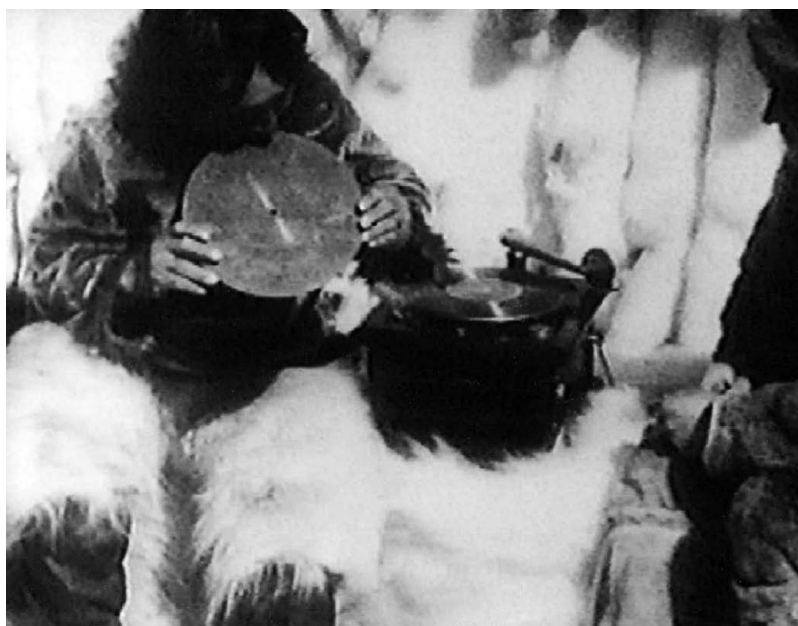
    Nichols uses the documentary, “Nanook of the North” by Robert Flaherty as an example of the significance of a documentarian’s intention. In the photograph above, you can see Nanook biting into a record. Nichols wants readers to interpret the photo and the documentary for themselves and ask themselves “Is this an act of playful hamming for the camera, or is this Flaherty’s way of
    demonstrating the backwardness of his subject?”(Nichols 195). Both Nichols and Coles stress the importance of understanding the intention of a documentarian and using that understanding to become more knowledgable on the story and its significance.

  • How Elahe Esmaili’s Location Affects Storytelling in “A Move”

    Esmaili’s location influences the film through her close-knit family. Her choice to capture a sweet moment of her family and friends dancing, laughing and smiling together makes viewers feel the love they share through the screen. Therefore, when she shares clips of that same community silently judging her for not wearing a hijab, it feels more devastating. In Doing Documentary Work, Coles writes, “Once more, the issue is that of location—how a particular writer or researcher decides to commit himself or herself with respect to those others being studied, watched, heard, made the subject of a writing initiative”(Coles Chapter 1, Pg 24). By following the scenes of her mother asking her to wear a hijab, to the community dancing together, with a clip of her mother praying and crying, demonstrates how much her mother loves her but feels somewhat betrayed by her in a way.

    Esmaili’s location influences the film through her choice to share her story from the position of a participant observer. The entire documentary is filmed as if the viewer is actively participating in everything with Esmaili. She does a very good job at capturing her experience as an Iranian woman who is doing something against societal norms and her family’s expectations. As Coles explains, “I may well be called a ‘participant observer’ or an ‘advocate’ by readers or colleagues, or by myself in what I say or imply about myself: someone who has become ‘involved’ with those he has met… one who worked alongside those he was getting to know”(Coles Chapter 1, Pg 23). This idea perfectly encapsulates Esmaili’s role, since she is not an outsider or simply just an observer, but is rather someone who is actively involved and whose presence shapes the story. What is particularly beneficial about Esmaili’s choice to incorporate this style is that viewers understand much more about her experience and feelings this way. If she were to create a documentary about the movement for women’s rights in Iran from an outsider’s perspective, viewers would lack the empathy and understanding of the true experience of a day in the life as a woman in Iran. 

    Esmaili’s location shapes the documentary by evoking emotion in the viewers. Her choice of sharing her story from the position of a participant observer allows viewers to feel both the love and judgement that she experiences from her community. Esmaili clearly exemplifies Cole’s definition of location in documentary work.