In “Stranger With a Camera”, documentarian Elizabeth Barret locates herself as not only the filmmaker, but as a resident of the community she documents. She documents the 1967 killing of another filmmaker who came to document poverty in the area. What makes this documentary powerful is how Barret shows her own position in it. She does not document as someone who is observing a new place, rather she is someone who belongs to the community she’s filming. Her social and personal location shapes everything about the film.
Barret’s connection to the people of Appalachia is clear from the way that she films. Including clips of everyday life, by capturing the mountain roads and family gatherings makes the story feel more familiar and real, and is what makes the story of violence and misunderstanding more impactful. As Robert Coles writes, “the issue is that of location—how a particular writer or researcher decides to commit himself or herself with respect to those others being studied, watched, heard, made the subject of a writing initiative” (Coles, Ch. 1, p. 24). Barret’s commitment to documenting this story is evident, as she loves the community, but also must represent both sides of the story she documents with respect to all subjects.
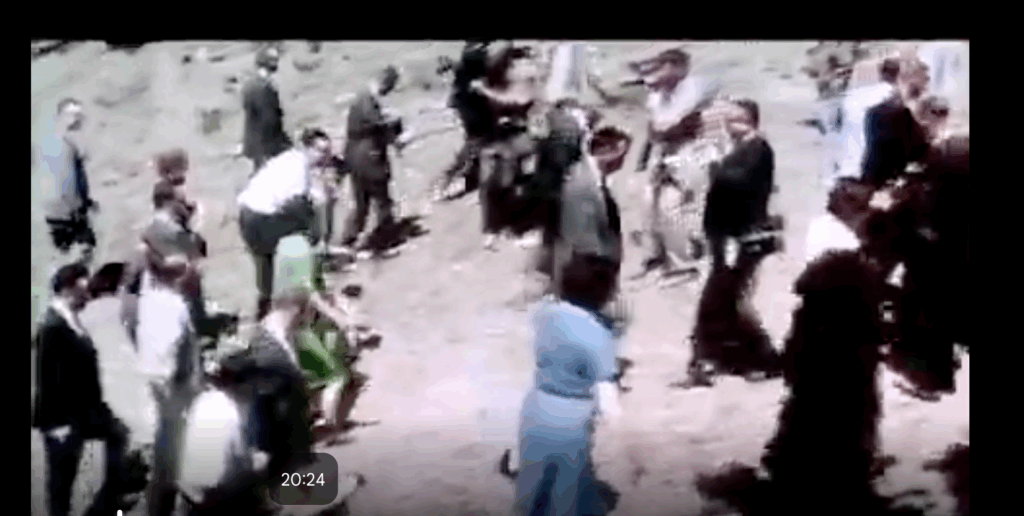
This image, taken around 10:58 in Stranger with a Camera, shows a group of local residents walking together through their Appalachian community. It reflects Elizabeth Barret’s location as both a filmmaker and a community member. By filming familiar people in their everyday lives, she shows that she is part of this world, not an outsider observing from a distance. The shot feels natural and respectful, capturing the average daily life of people. This choice shows Barret’s closeness and understanding for the people she films and her desire to represent them with honesty and care.
Barret also films as what Coles calls a “participant observer”, which is someone involved in the story they document. She appears in the film and speaks in a calm, reflective voice, allowing viewers to see her own doubts and responsibilities as a filmmaker. “I may well be called a ‘participant observer’ or an ‘advocate’… someone who has become ‘involved’ with those he has met,” Coles writes (p. 23). Barret exemplifies this idea perfectly, as she is both inside and outside of the story.
Bill Nichols says that a documentary’s voice “shows how the filmmaker engages with the historical world and conveys that engagement to us.” Barret’s narration, careful editing, and honesty all reflect that engagement. Through all of Barret’s efforts, viewers feel both the love and the discomfort that come from filming a person’s own home.
Leave a Reply