In Robert Coles’ “Doing Documentary Work” and Bill Nichols’ chapter, “How can we define documentary film?”, both authors refer to documentary work as a film that displays real events and real people, although they both approach this idea from different perspectives. Nichol’s emphasizes how “Documentaries tell stories about what happens in the real world” (Nichols p.7). His writing is very direct and gets straight to the point of common aspects of documentary work. He stresses the idea that documentary work is to portray exactly what the fact of the event or story was. Coles focuses immensely on how the documentarian’s values, location, and emotions ultimately shape the result of a documentary. Coles clearly aims to get across to readers that documentaries are always a mix of truth and personal perspective which is influenced by a persons location and environment. He writes,“They also move from the third-person voice to that of the first person—a shift that tells a lot about their connection to the people being described, and about their intentions as writers” (Coles 42). This emphasizes his point that the location of the documentarian will shift the story of the film. By understanding the intention of the documentarian, we as the viewers can better understand the story as a whole, because the message becomes much clearer when we understand why they chose to share what they did.
While they have different perspectives on documentary work, they also share a common view that documentaries are never neutral, and will always be shaped by the perspective of the documentarian. Nichol’s points out the importance of the use of modes and models, editing techniques, chronology of scenes, etc (Nichols 195). He mentions how beneficial it can be to take notes on these types of things in order to better understand the work in terms of how it was made, why it was made, and what the intention was behind it.
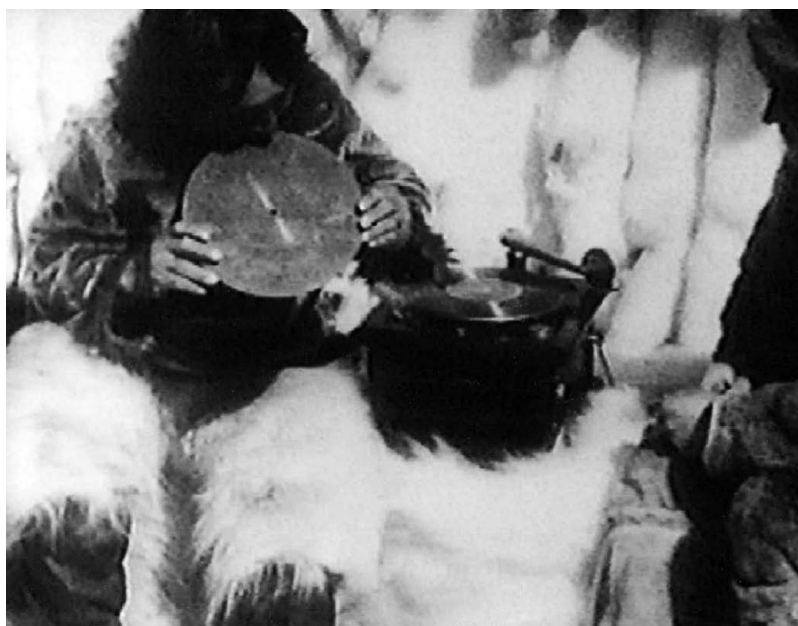
Nichols uses the documentary, “Nanook of the North” by Robert Flaherty as an example of the significance of a documentarian’s intention. In the photograph above, you can see Nanook biting into a record. Nichols wants readers to interpret the photo and the documentary for themselves and ask themselves “Is this an act of playful hamming for the camera, or is this Flaherty’s way of
demonstrating the backwardness of his subject?”(Nichols 195). Both Nichols and Coles stress the importance of understanding the intention of a documentarian and using that understanding to become more knowledgable on the story and its significance.
Leave a Reply